

09 November 2025
22:20 — on job hunting.
Haven’t written in a while.
Going through a tough time with the job hunting.
Feels like the following is true:
Effort + patience + timing + randomness = opportunity.
I’m putting in the effort, trying to be patient, but still 0 out of 55 applications so far. At the mercy of timing and randomness.
I don’t just want any job; I want a great career at a purpose-driven company —something new, something different, something I can believe in. Call it idealistic, but it motivates me.
The right thing will come.
15 September 2025
09:31 — on good deeds // everything is connected.
I helped an older man carry his luggage up a broken elevator last night. He was carrying two bags, one for him, one for his wife. I could see he was struggling, but making a valiant effort. Halfway, he stopped, asking if I would like to pass. I said no, I’d like to help. He gleefully accepted.
It was heavy, together with my own luggage. But they were so grateful. It put a smile on their face.
And it made me happy. Why?
Everything is connected. We are all one. If you help others, you help yourself. Trying to get ahead of everyone else just hurts you in the end. It feels better to be part of something bigger.
05 September 2025
09:59 — you already have all the tools you need.
“Never let the future disturb you. You will meet it, if you have to, with the same weapons of reason which today arm you against the present.” — Marcus Aurelius, Meditations
Find myself getting anxious before big projects sometimes. Will I perform? Will I figure it out? Will I let the team down (the worst)? All these doubts creep in. Just because the outcome is unknown. But, over the last 9 months in the MBA, over my 12 year career, I’ve proved time and again that I can perform, that I can hang tough, that I am able to make sense of things and find a solution. So why the doubt? Why the anxiety?
It serves no purpose, only exhausts you, only distracts you.
Smile, welcome the challenge, for you know you will find a way. And if you can’t figure things out immediately, there is always help, you are not alone.
09:55 — on seeking recognition.
“Stop asking for the third thing. What’s the third thing? You’ve done something good, and someone benefited from it. The third thing is the recognition, the parade, the appreciation, the credit, the payback.” – Ryan Holiday
Tricky.
I seek recognition often. Partly ego. But also — sometimes you just want to know you’re on the right track. During my internship, my manager never gave feedback, so I had no idea if I was doing good work.
But maybe that’s the point. “Someone benefited from it.” That should be enough. The recognition can wait.
14 August 2025
14:42 — Keep expressing.
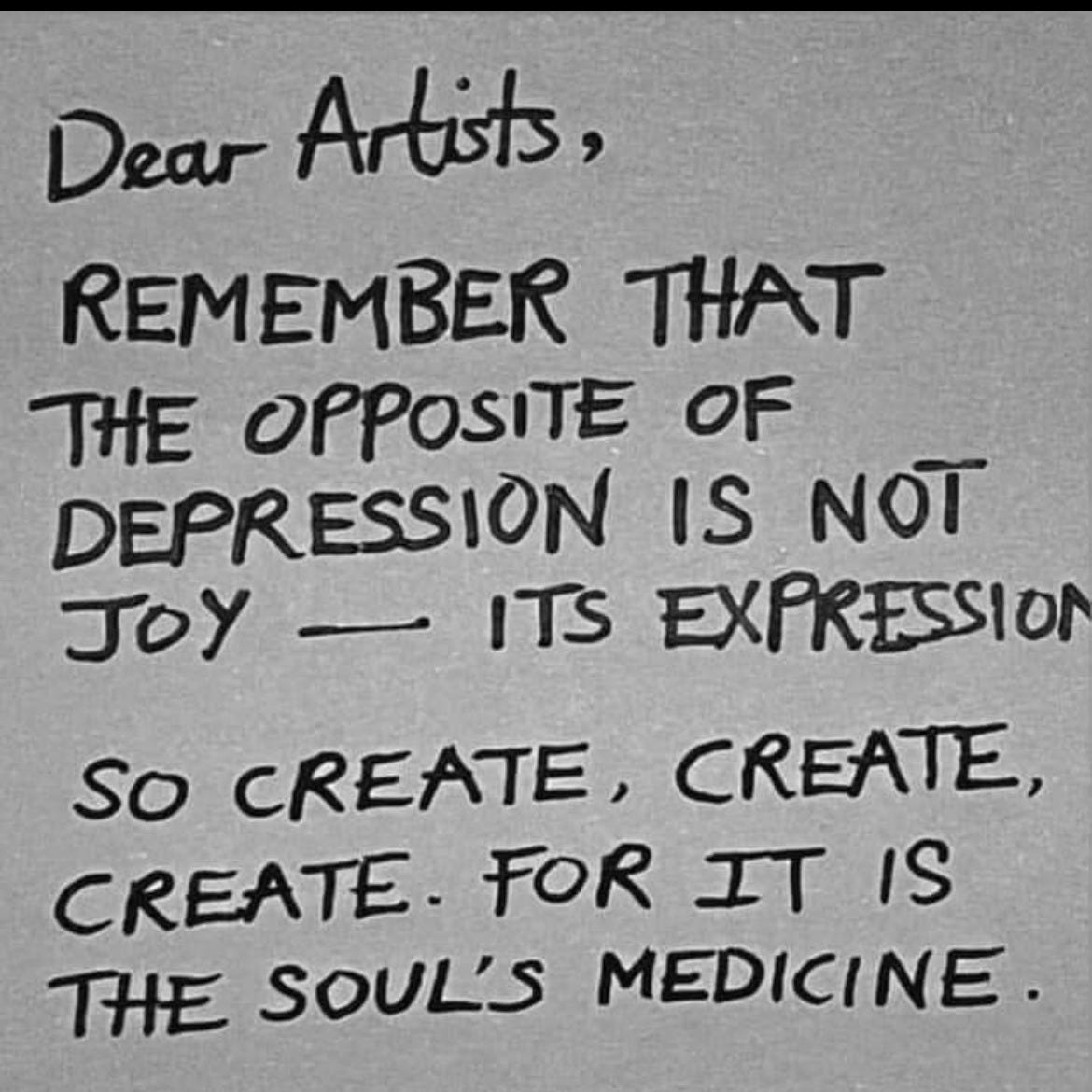
I stopped writing this year, I was in a slump. My mate and I started a podcast, I made a comeback, I feel good again, I feel a lot of joy and energy and possibility. It’s easy to stop and scary to start. Easier to continue, keep the momentum, keep riding that good feeling.
13:41 — Life has a way of sorting you out.
“In the end we all come to be cured of our sentiments. Those whom life does not cure death will. The world is quite ruthless in selecting between the dream and the reality, even where we will not. Between the wish and the thing the world lies waiting.” — Cormac McCarthy, All the Pretty Horses
Stoic almost.
Can’t have too big a gap between expectations and reality. The bubble will be popped. I was cocky when I started off in Joburg in 2014. I was in a relationship, I had finished a degree cum laude, I had a fancy new job, but then lost my girlfriend, failed a big exam, and struggled at work. All in a row. This brought me back down to earth.
Better to stay grounded. This is not pessimistic, this is not me being less or smaller, it’s just a way of building incrementally in a sustainable way.
Also see this with others — want to warn them but sometimes they need to make their own mistakes.
Like Icarus flying too close to the sun.
12:07 — Good one. Maps well to my experience.
“A woman needs to be told that you would sacrifice anything for her. A man needs to be told he is being useful. When the man or woman strays from that formula, the other loses trust. When trust is lost, communication falls apart.” — Scott Adams, God’s Debris
31 July 2025
10:45 — writing in the age of AI.
Can feel my mind pulling towards the easy out instead of doing the hard lift myself. Becoming too dependent on it.
But that’s cheating myself. Better to have my morning logs. Better to do it myself. Keep my mind sharp. Remember when I was sharper, had more thoughts, better memory. Now feel sluggish, slow, not at my peak. Can be better.
At the same time, recognise the power of AI to full gaps, build bridges, smoothen edges. Goal: write the first draft myself, edit/review with AI.
10:39 — stop doing things you don’t enjoy (and stop wasting other people’s time in the process).
You don’t need to do stuff you don’t enjoy. Things you don’t want to.
A CTO who wants to only code is perfectly fine — but he’s not a leader. Then he should be a single contributor, not the Chief Technology Officie. You can be whatever you want, but don’t force yourself into something else. It wastes your time and everyone else’s.
I’ve been there. Doing things to uphold an image. Sometimes to get paid — that’s a tricky one. But usually you’re just delaying the inevitable. Why be unhappy when there’s something out there that’s the perfect fit for you?
I sometimes blame my parents for ‘forcing’ me into actuarial science. But I wasn’t forced. They supported me. I could’ve gotten out. I was just too uncertain to leave. And then I wanted to drag everyone down with me, cynical and judgmental about other people’s careers because I didn’t enjoy my own.
27 April 2025
13:51 — on expanding your awareness.
“We take a handful of sand from the endless landscape of awareness around us and call that handful of sand the world.” — Robert M. Pirsig, Zen and the Art of Motorcycle Maintenance
Best way to do this? Reading, I’d say. Travel is also up there, but more expensive. Having a diverse group of friends.
13:46 — speaking tips.
This is a great one. Will remember this for meetings.
“Another common speaking trick is to hum the first part of the “Happy Birthday” song and then speak in your normal voice right after. You’ll notice your posthumming voice is strangely smooth and perfect.” — Scott Adams, How to Fail at Almost Everything and Still Win Big
We worked with a speech coach, Robin de Haas, earlier this year, who also gave us these 5 tips:
Exercise #1: Connect your breath to your body.
Exercise #2: Focus on the exhale.
Exercise #3: Speak on the airflow.
Exercise #4: Explore vocal variations.
Exercise #5: Connect voice and mind.
5 Techniques to Build a More Powerful Speaking Voice
16 March 2025
22:44 — on difficult conversations.
For the leadership stream in our MBA, we did a case on the book “Difficult Conversations: How to Discuss What Matters Most” by Douglas Stone.
I applied the lessons to a difficult conversation I should’ve had earlier at work last year.
One of my team member’s underperformance was jeopardizing a major client project. She started off strong, but her attention to detail dropped, her communication with the client deteriorated, and she missed deadlines without valid excuses.
Stone notes that every conversation happens at three levels: substance, emotions, and identity. In a previous call, when the client confronted her, she started crying, so I was bracing myself for big emotions again. My identity as the supportive, helpful “nice” manager also clashed with the disciplinarian role I suddenly had to adopt.
I appreciate Stone’s point about reframing the dilemma between avoiding and raising an issue. I always dreaded the painful conversation, but I didn’t always consider the cost of letting things fester and the benefits of clearing the air.
Looking back, I wonder if addressing her performance earlier might have preserved the client’s trust.
I’ve learned that the short-term pain (cost) of a frank, open conversation is often outweighed by the benefits of clarity, accountability, and trust.
22:27 — compliments I received from my team.
We did an exercise yesterday with my MBA team where we shared three things in a one-on-one speed dating setting. 1. What we admire about the other person. 2. Suggestions on where the other person can improve. 3. What we learned from the other person.
What other people see in me:
I am a source of safety. People in the team feel safe around me. I bring stability and a sense of calm to the team. I am their rock.
I can be even more forceful if I want to be. I am scared of intimidating others so I often hold back, but the team believes I can lean into my confidence and be stronger when the situation calls for it. Be kind instead of being nice. Radical candour. It’s better to be kind (give real feedback that’s uncomfortable sometimes) than being nice (avoiding tough conversations).
I have a real presence when I walk into a room. People listen and pay attention when I speak.
I am a great communicator. Very good at writing and creating slides.
I bring a calm energy to the team that helps to get the best out of everyone.
It’s clear that I care a lot and that I want the team to do the best we can.
22:05 — on marriage / your partner fulfilling certain roles.
Might sound controversial, but I don’t think your marriage has to be the place where you fulfill all your needs.
Jess and I have a great relationship but we also realize that we are limited in our capacity - we can’t be everything for each other. We support each other, but we can’t be each other’s therapists or coaches. We want the best for each other’s careers, but we can’t be each other’s career advisers. We want to have fun with each other, but we also recognize how friends can help us have fun in different ways.
The ‘limited’ nature of marriage (or any mature relationship) isn’t to say marriage isn’t a wonderful thing.
In fact, it’s because of recognizing where it’s limited and what it’s good for, that makes it beautiful.
Don’t put too much pressure on it to solve all your problems.
21:31 — on team dynamics.
I’m in a new team in my MBA.
We are struggling to find a rhythm.
First of all, we’re 6 people, so it’s a lot. I find teams of 3-4 work better. But it is what is and I want to get the best out of everyone.
In short, we are working with a startup and helping them with their go-to-market strategy.
Two people have nominated to handle comms - one with our startup coach, one with the actual startup.
So far it’s been disappointing. They communicate slowly or not at all. They don’t keep promises. They don’t show respect.
I want to do right by these people. I want to give it a fair shot.
I remember reading this line, I think it was in Zero to One by Peter Thiel or The Hard Thing About Hard Things by Ben Horowitz or both, but it always stuck with me. The startups that do the best are the startups that are the most responsive. It could actually have been Paul Graham from Y Combinator.
The startups that do the best are the most responsive. This shows (1) the startup is the most important thing to the twam, (2) they respect other people’s time so when someone reaches out with advice/inputs/feedback they show gratitude/recognition of receiving the email quickly.
Granted, this isn’t our startup, but I still believe as a team it would be great to live those values.
Want to ask them - do they want to be a high-performing team?
Will be good to chat to them tomorrow to understand how we can work better:
immediate replies recognizing receipt - this is a cool role and you get airtime
not going to freeze/unfreeze each other - give people freedom
team > individual but if someone has a clash we can move ahead without them - everyone doesn’t always have to be there
play to our strengths (could be a weakness as well if it creates a bottleneck neck so need ways around that)
take feedback well - let the best ideas win and don’t become beholden to your ideas
don’t take things personally
commit to the success of the team (could be a weakness if it takes time away from personal life, so need boundaries)
jokes - it’s important to keep a sense of humour, which carries you through the tough times and keeps a sense of perspective
trust each other - this takes time
communicate well, clearly and early
form a good idea of each other’s emotions and where we stand with each other - this takes time
21:25 — new insights into writing.
I listened to this great How I Write podcast episode between David Perell and Shaan Puri.
It’s a great episode if you want to learn about writing but also listen to two dudes just shoot the breeze about a topic they’re passionate about.
Some takeaways:
Be excited.
Create a state change. Sprint, do air squats, or put your head in ice water. Do something to change your physiology before writing or recording yourself. This makes you perform better.
Write for Betty in her bed. What emotion (OMG, LOL, SMH) are you trying to evoke in her and write for that. Solve for that.
There is arbitrage in doing things / working on things that other people overlook (or ridicule) e.g. working on storytelling, working on enthusiasm, working on humour
Framing is more important than the hook e.g.
21:18 — on doing long distance. Spoiler: It’s not so bad.
My wife and I are currently in a long-distance relationship.
It’s definitely tough, life is just much easier when you’re at your secure base.
But it’s not all bad.
Some advantages Jess and I have seen:
she’s sleeping earlier and getting back to her natural bedtime/wake-up rhythm. She’s more energised as a result of this. She reads in the mornings. She has more time for sports. It’s cool to see her move to these healthy habits she had before meeting me.
likewise for me. I’m writing more. I work till late at night. I’m more focused on myself and what’s good for me. It’s a year of self-development.
Feels risky writing this but I want to acknowledge that long distance can be an opportunity to review what works for you as an individual and then take that into the relationship anew/afresh when you’re back together again.
When you’ve been together for long, you fall into each other’s habit and each other’s patterns. You lose what made you an individual and what habits were good for you. You could also lose that individuality that initally made your partner fall in love with you. Good to be apart and realize this and then do a reset when you’re back together.
Think that’s fair?
Completely understand if other couples work differently, but this is what I’ve observed for us.
In short - long distance isn’t all bad. Make the most of it to grow as an individual, reset and be more intentional when you’re back together.
21:15 — finding a secure base.
I’m finally finding my feet in the MBA. I got ripped out of my secure base (friends, my wife, our dog, our life in Munich) and dropped in a new environment, completely new, complete foreign.
I’m finally feeling more secure in the group. Forming friendships, forming bonds. I didn’t realize how important this is to me. I am self-assured but at a subconscious level I now recognize how important this secure base was to me.
Happy to find it again now.
21:13 — struggling together.
I can’t learn something from other people when the going is good.
I want to see someone’s character when life is tough. How do they perform under pressure? How do they react to stress? What is their true nature?
This is when I get respect for people.
We recently wrote exams. It was grueling, late nights, high stress. My classmates got through it. We suffered together. This brought us closer. I knew they were good people, but I now have more respect for them, I see more goodness in them, I want to be friends with them. They are deserving.
20:51 — going back to basics.
My early essays were actually quite good. Wonder if lots of people can say that. The essays might not have been the best writing but they were from the heart, and most importantly, they gave a fresh perspective on something. I captured an idea that many people were thinking but hadn’t put into words yet e.g. Luck Surface Area. I believe there is real power in that.
After this initial success, I deviated. I got more into documenting things. I started a newsletter which was more of a collection of ideas and things happening in my life. Not long-form essays. Feel like I lost my voice.
A big moment was when I wrote a personal essay, something quite revealing about parents living through their kids, also how I struck out at others because I wasn’t happy with myself. My family felt like I was over-exposing them and me. This was a tough one to swallow. Struggled with it a lot. Spoke to many people for guidance, also put a wedge between my parents and I.
After this, instead of playing to thrive, I started playing not to lose. There’s this concept I learned in the Leadership Stream of our MBA. Caring and Daring. You can play to avoid, play to dominate, play not to lose, and play to thrive. The last one requires 100% caring and 100% daring.
My writing became stale, less insightful, less useful. I was playing not to lose.
It would be cool to go back to the original vision.
Wonder how that looks?
A newsletter is fun because you can share more. You can share snippets, quotes, favourite books, essays etc.
A long-form essay has benefits. People read your writing. It’s one topic. You take people on a journey. Wonder how to mix the two?
But the energy has to come from the same place: writing from the heart, capturing what others are thinking but haven’t said.
14 March 2025
13:10 — like this quote from Amor Towles:
“The first was that if one did not master one’s circumstances, one was bound to be mastered by them; and the second was Montaigne’s maxim that the surest sign of wisdom is constant cheerfulness.” — Amor Towles, A Gentleman in Moscow
Believe in both rules.
Stoicism. Control the controllables. Control your emotions. Control your attitude. Control where you’re going.
Fatalism. Can only be happy if you come to the realization that there’s not much to worry about. Nothing really matters in the end (it’s all a movie), so choose to laugh more, worry less.
13:07 — three favourite lessons from Humanball by Tom Dawson-Squibb and Nic Rosslee:
Wanting to win > needing to win:
“Wanting to win is a necessity if you want to be competitive. It is fuelled by energy, aspiration, and generally positive emotions. Needing to win, on the other hand, is driven by fear and can easily become burdensome and create negative emotions.”
Believe you can have an impact:
“Hey Coachie, where you off to?” I was on my way to coach the Flyers on The Fortress and said to him half-jokingly, “I’m off to go and change some lives.”
Meet people where they are, leave them where you want them to go.
“Eric Simons, the former Proteas coach, is someone I admire and have had many meaningful chats with; he will often say, “When you’re giving someone directions, what’s the first thing you do? You ask where they’re coming from.” I usually think about those words when I’m trying to get a sense of what needs to be said.”
13:06 — Summary of 10% Happier by Dan Harris:
Ten Pillars of Cutthroat Zen
Don’t Be a Jerk
(And/ But . . .) When Necessary, Hide the Zen
3. Meditate
4. The Price of Security Is Insecurity— Until It’s Not Useful
5. Equanimity Is Not the Enemy of Creativity
6. Don’t Force It
7. Humility Prevents Humiliation
8. Go Easy with the Internal Cattle Prod
9. Nonattachment to Results
10. What Matters Most?
13:03 — on finding meaning.
“Part of the problem, Mitch, is that everyone is in such a hurry,” Morrie said. “People haven’t found meaning in their lives, so they’re running all the time looking for it. They think the next car, the next house, the next job. Then they find those things are empty, too, and they keep running.” — Mitch Albom, Tuesdays With Morrie
See this a lot in people. Think it can be a massive distraction if you have someone like this in your life. Need to find a deeper meaning/purpose. Makes you grounded.
02 March 2025
17:35 — on keeping an open mind.
I think you lose a lot of nuance when you make blanket statements about people or hold certain strong positions. Like Trump’s 100% the worst president ever or I’m a devout atheist. It’s perfectly fine to hold those views, but you lose the ability to be curious, to truly try to make sense of things. It’s an easy out, it’s playing it safe because it’s an established position. But what you lose is being truly open minded (ironic) and being open to new ideas.
Far greater threat/downside than being seen as being out of line with the mainstream.
21 February 2025
10:24 — find a higher purpose than money.
“Nor did the Antarctic represent to Shackleton merely the grubby means to a financial end. In a very real sense he needed it—something so enormous, so demanding, that it provided a touchstone for his monstrous ego and implacable drive.” — Alfred Lansing, Endurance
10:20 — on marital love.
That passage from Corinthians that everybody reads at weddings really does define marital love: “Love is patient, love is kind. It does not envy, it does not boast, it is not proud. It does not dishonor others, it is not self-seeking, it is not easily angered, it keeps no record of wrongs. Love does not delight in evil but rejoices with the truth. It always protects, always trusts, always hopes, always perseveres.” — David Brooks, The Second Mountain
17 February 2025
20:19 — cool perspective to counter the staunchly irreligious.
“But I now realized that a sort of incuriosity had set in; my sense of awe had atrophied. I might have disagreed with the conclusions reached by people of faith, but at least that part of their brain was functioning. Every week, they had a set time to consider their place in the universe, to step out of the matrix and achieve some perspective. If you’re never looking up, I now realized, you’re always just looking around.” — Dan Harris, 10% Happier
19:52 — cool quote if you want to talk about transformations.
“Lao Tzu said that what the caterpillar calls the end of the world, the rest of the world calls a butterfly.” — Jed McKenna, Spiritual Enlightenment
19:34 — the point of this MBA year. A time for reflection. A hard break, stopping the train and checking if it is even on the right track or speeding somewhere I don’t want it to go.
“Always it was the same, Furlong thought; always they carried mechanically on without pause, to the next job at hand. What would life be like, he wondered, if they were given time to think and reflect over things?” — Claire Keegan, Small Things Like These
16 February 2025
22:14 — Doctor Zhivago on shared happiness. Love this.
“And so it turned out that only a life similar to the life of those around us, merging with it without a ripple, is genuine life, and that an unshared happiness is not happiness, so that duck and vodka, when they seem to be the only ones in town, are not even duck and vodka. And this was most vexing of all.” — Boris Pasternak, Doctor Zhivago
20:26 — on setting a high standard.
“But it is still important to set a high standard. It is still important to be inspired by the examples of others and to remember that a life of deep commitments is possible. When we fall short, it will be because of our own limitations, not because we had an inadequate ideal.” — David Brooks, The Second Mountain
I like this book. Probably my most-quoted book so far?
20:21 — find something I can devote myself to.
“The secret of life,” the sculptor Henry Moore once said, “is to have a task, something you devote your entire life to, something you bring everything to, every minute of every day for the rest of your life. And the most important thing is, it must be something you cannot possibly do.” — David Brooks, The Second Mountain
20:18 — on people pleasing.
“Our natural enthusiasm trains us to be people pleasers, to say yes to other people. But if you aren’t saying a permanent no to anything, giving anything up, then you probably aren’t diving into anything fully. A life of commitment means saying a thousand noes for the sake of a few precious yeses.” — David Brooks, The Second Mountain
06 February 2025
08:30 — on taking responsibility.
“People who are ignorant of philosophy blame others for their own misfortunes. Those who are beginning to learn philosophy blame themselves. Those who have mastered philosophy blame no one.” — Epictetus, The Manual
Cool to experience this arc. Was like this when I was younger, blaming my dad for how I got out in cricket. Had to work hard to change this, everything is my responsibility. Reminds of Jordan B Peterson’s teaching.
05 February 2025
08:29 — on enemies and forgiveness.
“He knew that our enemies by contrast seem always with us. The greater our hatred the more persistent the memory of them so that a truly terrible enemy becomes deathless. So that the man who has done you great injury or injustice makes himself a guest in your house forever. Perhaps only forgiveness can dislodge him.” — Cormac McCarthy, The Border Trilogy
Pairs well with what Solzhenitsyn said below - if you were the prison guard, you might have been cursed to perform the same brutal acts.
04 February 2025
13:09 — never stop putting in the work. Every day is a small victory against your weaker self.
“Although I tried to always keep in mind something a friend had once told me: “Your demons may have been ejected from the building, but they’re out in the parking lot, doing push-ups.” — Dan Harris, 10% Happier
13:05 — modern society in a nutshell.
“Modern capitalism is a pro at two things: generating wealth and generating envy. Perhaps they go hand in hand; wanting to surpass your peers can be the fuel of hard work. But life isn’t any fun without a sense of enough. Happiness, as it’s said, is just results minus expectations.” — Morgan Housel, The Psychology of Money
12:47 — your misfortune could be good for you.
Beautiful passage by McCarthy. Deal with your shit. Work through your setbacks. Use the misfortune to become stronger.
“He said that those who have endured some misfortune will always be set apart but that it is just that misfortune which is their gift and which is their strength and that they must make their way back into the common enterprise of man for without they do so it cannot go forward and they themselves will wither in bitterness.” — Cormac McCarthy, All the Pretty Horses
Reminds me of what the Stoics say (also quoted below):
Here is a rule to remember in future, when anything tempts you to feel bitter: not “This is misfortune,” but “To bear this worthily is good fortune.” — Marcus Aurelius, Meditations
Similar pattern. From two different writers, two thousand years apart. Misfortune could be good fortune.
12:43 — coming alive over getting ahead.
Love this mantra. Very brave.
“Although my podcast and writing were starting to feel much more important, they still had to coexist with the consulting project. So I came up with a mantra for future decisions: “Coming alive over getting ahead.” It was a reminder to choose work that lit me up, rather than work that merely serves to earn more money.” — Paul Millerd, Good Work
Something similar. Rather go for “hell yes” than “kinda cool”.
“Once you reach a decent level of professional success, lack of opportunity won’t kill you. It’s drowning in “kinda cool” commitments that will sink the ship.” — Timothy Ferriss, Tools of Titans
Be ruthless with your time.
12:40 — why children bring out the best in us. They aren’t scared, they are unfiltered.
“Children are more honest, they aren’t frightened of the truth, but we are so afraid of seeming to be behind the times that we are ready to betray what is most dear to us and praise what repels us and say yes to what we don’t understand.” — Boris Pasternak, Doctor Zhivago
11:51 — balancing act. Also Dosto.
“Risk, openness, unpredictability, and will are all necessary for a meaningful life, but—and here is the point Dostoevsky constantly affirmed—they permit responsibility and freedom only when not taken to the extreme.” — from The Gambler by Fyodor Dostoevsky
29 January 2025
23:47 — on bosses.
“People leave bosses, not companies. Five components are necessary for successfully leading people: a leader’s attitude, empathy, communication, selling and negotiation.” — Klaus Metzenauer, Succeeding in Business in Any Market - Volume II
Very true. Experienced this myself, main reason I left Generali, my previous manager (who I revered) left and I didn’t respect the new one.
23:45 — financial reframe.
“They said, “why not consider the savings a gift from your former self?” Hmm. That was interesting. I could be grateful to “achiever Paul” for making this money and giving me the chance to reinvent myself. I loved the idea and I’m not sure why it worked, but in that moment, I gave myself permission to enjoy my life much more. While employed, my savings was for retirement, something I wasn’t supposed to enjoy until I was 65 years old. But now I asked myself, “Why wait?!” — Paul Millerd, Good Work
This is how I’m trying to think about the MBA. Using my savings as an investment from my former self into who I’m becoming.
23:41 — Make doing good deeds a habit.
“If you do a series of good deeds, the habit of other-centeredness becomes gradually engraved into your life. It becomes easier to do good deeds down the line.” — David Brooks, The Second Mountain
27 January 2025
20:10 — on AI in education.
Learning in a very practical, hands-on way at IMD.
They encourage us to think for ourselves (do the work first), but then they encourage us to incorporate AI to enhance our thinking. Our original answers supplemented with more suggestions from LLMs are vastly superior to just doing this alone.
This is a good approach. It recognizes the reality of how the world works out there, while teaching us to not outsource the problem solving to the machines, and still do the mental hard yards ourselves.
20:03 — met Michael Watkins today. Author of The First 90 Days.
His advice for writing - just write 30 minutes every day. That’s the only way.
My habits have gotten sloppy. Need to fix this.
I like his approach to teaching — when someone asks a question he flips it back to the audience and he lets the person answering debate the person asking the question. In this way he pushes people to continue thinking, not to switch off after the question, think a few steps further, like a chess game.
26 January 2025
11:17 — you decide how you feel. You control the frame.
“Nothing is bad or good of itself. What most people are not aware of is that they themselves decide – consciously or unconsciously – how they will view their circumstances.” — Klaus Metzenauer, Succeeding in Business in Any Market - Volume II
11:16 — stay humble.
“If you do something too good, then, after a while, if you don’t watch it, you start showing off. And then you’re not as good any more.” — J.D. Salinger, The Catcher in the Rye
11:15 - good advice:
“Don’t take anything personally because by taking things personally you set yourself up to suffer for nothing.” — Don Miguel Ruiz, The Four Agreements
25 January 2025
20:56 — this is my ultimate challenge. To bear things wortily. To not pity myself, to control my emotions.
“Here is a rule to remember in future, when anything tempts you to feel bitter: not “This is misfortune,” but “To bear this worthily is good fortune.” — Marcus Aurelius, Meditations
20:55 — on surrender.
“Our job in this lifetime is not to shape ourselves into some ideal we imagine we ought to be, but to find out who we already are and become it.” — Steven Pressfield, The War of Art
Heard a similar expression last week and it stuck with me.
23 January 2025
21:05 — how beautiful is this. Again from Ashwin Sharma:
“this obsession with “self-improvement” is driving me nuts because the greatest thinkers have already shown us that true success lies in being who you already are. gk chesterton wrote “a tree doesn’t try to become a better tree - it just grows according to its nature,” because there’s no pretence, no concept of improvement. it just exists. merton found his way to the same truth: the moment you stop trying to be a “great poet” or “holy monk” and just be yourself, that’s when you actually find what you’re looking for. the paradox is you only surpass yourself when you stop trying to surpass yourself.”
Maybe I’m guilty of this. Constantly searching, tinkering, adjusting, seeking growth and improvement. There is an argument for surrendering to your true nature.
20:52 — saw some great presentations today.
I sometimes see myself in others. I like how Ashwin Sharma describes it here:
“the biggest unlock for me in 2024 was understanding that what a person sees in others is their own internal landscape being revealed. the unfiltered self speaking before the conscious mind can dress it up.”
During a careers session today, there was an HR manager who started by sharing that he loves music. He’s so passionate about music. He then went on to describe the company he was representing and you could see his whole body language change. Zero passion, zero emotion.
Part of me felt sad for him. Here’s this guy who’s clearly not doing what he should be doing. Maybe because he has a family to take care of, maybe because he doesn’t believe in himself, maybe because he’s scared that his wildest dreams can come true.
20:50 — ok, it’s been a while since I’ve taken this seriously. Many things going on. All positive. Bought a house, Jess and I celebrated our wedding, I moved to Switzerland to pursue an MBA.
Goal for 2025. Write more. Publish more. Don’t give up.
12 January 2025
16:09 — writer, not writing. Could be me. Change this.
“”Lots of people,” as the poet and artist Austin Kleon puts it, “want to be the noun without doing the verb.” To make something great, what’s required is need. As in, I need to do this. I have to. I can’t not.” — Ryan Holiday, Perennial Seller
15:47 — what a reframe.
“In the course of his imprisonment, Solzhenitsyn looked at the guard who treated him most cruelly. He realized that if fate had made him a prison guard instead of a prisoner, perhaps he would have been cruel, too. He came to realize that the line between good and evil passes not between tribes or nations but straight through every human heart.” — David Brooks, The Second Mountain